rådjuren flyger i skogen
(2022)
author(s): Anna Nygren
published in: Research Catalogue
Detta är en text fristående från men ändå del av mitt forskningsprojekt om våldtäktsmotivet i Monika Fagerholms
Vem dödade bambi? och Fredrik Backmans Björnstad. Jag har skrivit ner min läsning som poesi, för jag tror att
poesin är ett språk som kan tillföra något. Jag har skrivit ner mina känslor och tankar för jag tror på ett slags
”situated knowledge” att det är viktigt att minnas vem man är och från vilken punkt man läser texten. Jag vill
använda detta för jag tror att det privata är politiskt och att forskningen är personlig, och att jag är begränsad i min
gränslöshet, det finns inget objektivt. Denna text är ett undantagstillstånd och ett resultat av en plats och en tid. Jag
tror att någonstans i denna text kan något relevant hittas.

Musical Monticello: Classical Music and America
(2022)
author(s): Jasper Snow
published in: KC Research Portal
Thomas Jefferson’s Monticello plantation is here used as a case-study examiningclassical music’s foundations in the United States. Among other titles, Jefferson was a statesman, diplomat, slave master, and avid violinist. He is remembered as the principal author of the Declaration of Independence and third U.S. President. Early documentation suggests he was a gifted musician, reading notation at age nine and practicing “no less than three hours a day” for “a dozen years”. Music played an important role in the courtship of his wife, Martha Skelton Wayles, a harpsichordist and singer. They parented six children, of which two daughters survived to adulthood. Both received substantial keyboard training and their eldest inherited her father’s “taste and talent for music”. Upon their mother's death in 1782, Thomas began a complicated relationship with his late wife’s enslaved half sister, Sally Hemings. She became pregnant at sixteen and bore six of Jefferson’s children, four of which survived to adulthood. While Jefferson’s white daughters learned keyboard, two of his enslaved black sons were taught violin. It is likely that Jefferson himself taught them using the treatises of his expansive musical library, notably Geminani’s “Art of Playing the Violin”. A year after Jefferson’s death, the two sons were given their freedom; the youngest’s profession is listed as “musician” in the 1850 census; he is remembered as an “accomplished caller of dances”. These sons span the full stylistic gamut available in 19th century American music: from fiddle to violin. Thomas Jefferson and his family represent the kernels of America’s musical traditions, and the way they have morphed in parallel with America itself. The musical ecosystem of Monticello plantation is a dynamic location to discuss colonial music’s intersections with class, race, gender, and national identity.
Infected by theory - The Making of theoretical films
(2022)
author(s): Evi Jägle
published in: Research Catalogue
To connect or spread this to an artistic research would be a table for translating theoretical texts from Deleuze into a kinematographic vision and the background of how this can be done and why it is necessary. So it connects also with difference and repetition and its spreading power.
For example:
So art has the impact to transform things we can not say with theory and also links to the necessity to have an artistic theory. Spreading ideas and following the card of this ideas.
A deleuzian diagram for Foucault
(2022)
author(s): Evi Jägle
published in: Research Catalogue
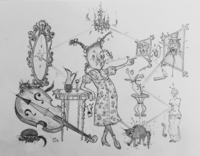
On the basis of the diagram that Deleuze made about Foucault himself to draw a path through his work, the lines are traced that bring it into contact with the cinematic thinking from Deleuze's time-image and movement-image and which kind of junctions between the works were found. A kinematographic view on Foucault projects him onto a filmic expression. For Deleuze, Foucault’s diagram is an exterior that gives his own thinking a layered structure, a layered formation. The layers form deposits and the reference to the outside of the diagram as a cinematographic cutting apparatus calls the visibilities and sayings into question again by assembling them together in such a way that an alogical cut is created. The creation of which must be sought. The distance in the power relations, which is reflected in the visible and the sayable, was able to experience a view with a transition to the film books that attaches a constitutive character to the interval and does not have to ignore it. A video expression will give the diagram of Foucault a visible character and uses Foucaults work as instruction or stage directions for how the sayable and seeable are connected.
Situating Personal Values in Artistic Practice: Towards a Reflective and Reflexive Framework
(2022)
author(s): Annick Odom
published in: KC Research Portal
In what ways can a musician use reflexivity and reflection to situate her personal values in her artistic practice? To answer this question and put the results into practice, the author combined archival and digital research, interviews, and fieldwork. By combining new and found materials inspired by Appalachian folk music and the state of West Virginia, the connected auto-ethnographic case study is a reflective attempt of the author to engage critically with her personal values of empathy, inclusion, and equity in her artistic practice. Using the reflective lenses of the author’s autobiography as an artist, the audience’s reactions, fellow artists comments, and literature review, she was better able to reflexively see her own assumptions and missteps, better allowing her to situate her personal values within her artistic practice. Besides creating a reflective framework by which other artists could consider their own artistic practice, she also found that by taking on new roles outside that of the traditional classically trained performer, she had a greater agency to influence and understand performance elements such as design and form, materials, context, audience, and production process.
Music, Meaning and Emotion
(2022)
author(s): Hannah Jefferies
published in: KC Research Portal
Name: Hannah Jefferies
Main Subject: Classical Flute
Research Supervisors: Ines de Avena Braga,
Research Question: How can elements and features from psychology and philosophy illustrate what is fundamental to our emotions, in what way can these concepts be represented within and expressed by the flute repertoire, and how can we incorporate and convey these understandings as performers to create music meaningfully and be of beneficence to others?
Summary of Results:
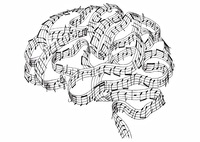
This research sets out to contrast and evaluate diverse standpoints from psychology and philosophy to discuss firstly how emotions can be defined, whether music creates real emotions in us, and what capacities we possess to be both receptive and conveying of emotion within music. During my discussion, I incorporate examples of excerpts from the flute repertoire, consider the harmonic language used and function of musical structures, and balance this against the resulting emotional response from us.
This initial discussion is in support of a questionnaire which I conducted in order to gather results from respondents of their perceived emotional response and valence when presented with differing musical excerpts, both upon an initial and second listening. I aimed to gauge and qualify their reaction to musical traits which have been connected more strongly than others to specific emotional states, and additionally I was interested to find if there was a connection between memory of a piece of music, and emotional valence due to this familiarity.
Finally, having demonstrated the emotive strength it is possible for music to hold, I investigate how as artists we can harness and emphasise certain functions of music to create performances which are highly engaging and positively affecting for listeners. Additionally, this research then leads us to an understanding of the impact of integrating the effects of emotion and music, and suggests how this combination can be beneficial and utilised in and for the wider society, namely in the field of music therapy.
Biography:
I am currently a second year masters student from the UK studying classical flute at the Koninklijk Conservatorium with Jeroen Bron and Dorine Schade, having recently completed my Bachelors degree at the Royal Northern College of Music in Manchester. During my studies I have been very lucky to have had the opportunity to perform as part of ensembles including Asko|Schönberg, New European Ensemble, European Youth Wind Orchestra, and Amadeus Orchestra Academy. Outside of performance, I greatly enjoy being part of outreach and community music; a highlight was working with the Manchester Camerata Orchestra, delivering music therapy to people with Dementia.