A LIST OF GRACIELA PARASKEVAIDIS' WORKS, INCLUDING INSTRUMENTS OF THE OBOE FAMILY (April 2023).
(2023)
author(s): Christos Tsogias-Razakov
published in: Research Catalogue
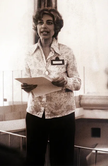
A list of Graciela Paraskevaidis' works, including instruments of the oboe family [with a total number of performers per piece, does not exceed eight (8) musicians], was published for the first time, in the frame of a Ph.D. research, about Hellenic (Greek) Oboe Repertoire, of the Ph.D. candidate: Christos Tsogias-Razakov.
All the used principal sources for this article (scores, pictures, etc.) are possible to be found
at the archive “La Fundación Archivo Aharonián-Paraskevaídis”.
Rodeo
(2023)
author(s): Jorge Moreira
published in: Research Catalogue
Rodeo é uma fonte condensada e não serifada, inspirada nos velhos filmes de western. Esta fonte variável apresenta-se em regular e slanted, combinando o seu tom divertido com a sua altura.
Realizado por Jorge Moreira
Carvings at Stechlin
(2023)
author(s): Björn Kröger
published in: Research Catalogue
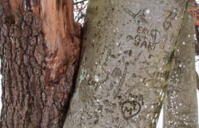
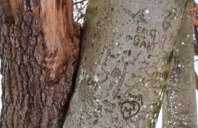
Nearly five hundred beech trees at Lake Stechlin, Germany have markings. The oldest of these grafitti reach back into the 1920s. Some are from the NS era, many are from 1950s to 1980s. I wanted to know what these signs can tell us about the history of the lake and its visitors.
Ritzungen am Stechlin
(2023)
author(s): Björn Kröger
published in: Research Catalogue
Knapp fünfhundert Buchen rund um den Großen Stechlinsee im Norden Brandenburgs, Deutschland, sind mit Ritzungen versehen. Die ältesten von ihnen stammen aus den 1920er Jahren. Es gibt Ritzungen aus der Nazizeit und viele aus den 1950ern bis 1980ern. Ich wollte wissen, was uns diese Zeichen über die Geschichte des Sees und seine Besucher*innen erzählen.
Bolas
(2023)
author(s): Figas
published in: Research Catalogue
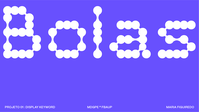
Bolas is a decorative display font that offers two weight options (Regular and Bold).
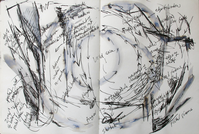
Seminar – Of Artistic Research: considered through hybrid writing and visual practice
(2023)
author(s): Mike Croft
published in: i2ADS - Research Institute in Art, Design and Society
The exposition involves the adaptation of the psychoanalyst Jacques Lacan's logical square, to convey an idea of artistic research practice considered from the perspective of the human subject's position in its midst. As part of the discussion the author has used some evidence of a previous lecture presentation, integrating such material with that of a newer project concerning the visualization of a nightmare image of a phantom in a portal. The tools of the research are a hybrid form of writing that embroils fictional and academic modes as a language-based practice, and visual artistic practice. The author takes Lacan's idea of the confounding of any logical argument by automatic obfuscation of it by unconscious process, and imagines that he has an other to him as a subjective second voice. The question of voices is central to the research; the suggestion that one does speak to oneself in various ways simultaneously that may be fashioned as distinct and separate. It is argued that the research aspect of artistic practice involves just a section of Lacan's logical square, particularly concerning contingency. This orientation may call to question one's tendency to reason and find meaning from the necessary locus of inquiry from the vantage-point of the language-based Symbolic – of Lacan's three psychic structuring registers Imaginary, Symbolic, Real. The element of fiction provides a literary inclination whereby, while the artistic research speaks about itself as research and references a visual practice, the exposition could also be considered a language-based practice in its own right.