Sounds of the Balkan - Editorial
(2022)
author(s): Diana Grgurić
published in: Journal of Sonic Studies
Sounds of the Balkan - Editorial
Listening against "The Transition"
(2022)
author(s): Theodore Teichman
published in: Journal of Sonic Studies
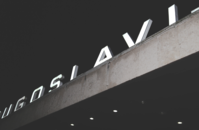
This is an archive of places, but it is even more an archive of the materiality of listening. This constitutes a larger inquiry and fascination with the listening as performance and the various “instruments” and “scores” that shape or encode this sonic event of the performance of the image. In particular, this project uses this arts-based research approach to engage critically with the concept of "The Transition," which has shaped the geography and imaginary of Ex-Yugoslavia. This is a collection of recordings made and then composed into soundscapes between September 2018 and May 2019 in Serbia, Bosnia & Herzegovina, and Kosovo. Through these techniques I propose an approach soundscape practices to engage materially the constitutive world of listening and the narration of time-worlds.
Mellanrum: towards an entangled audiovisual practice
(2022)
author(s): Julius Norrbom
published in: Research Catalogue
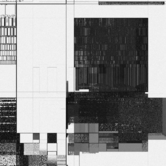
This artistic research project is a document of an entangled audiovisual practice in progress. With a generative approach and thinking in systems applied to modular synthesizers and procedural computer graphics the aim is to blur the line between the process of generating sounding material and the process of generating visual material. The project represents a move from writing and performing fixed compositions towards designing and improvising with systems that output open-form pieces in real time. Through experiments with new tools and techniques based on theories and other influences, and through reflections upon these experiments, two pieces/concepts have emerged alongside the foundation for a reimagined practice. To share the journey, material and knowledge that led to these pieces and the conclusion; I have stopped writing music and started designing networks, an exposition has been constructed. You are invited to browse, scroll, click, watch, and read this non-linear representation of the project in any order you see fit.
Soundscapes of Stalinism: Acoustical Experiences in Bucharest in the 1940s and 1950s
(2022)
author(s): Błażej Brzostek
published in: Journal of Sonic Studies
In this paper I point out phenomena related to the perception of sounds in Bucharest during the Stalinist period (1948-1956). I refer to personal accounts – diaries and memoirs – of representants of the city’s former social elite, sentenced to various deprivations under the communist regime. I focus on descriptive accounts of sounds in the city’s everyday life. The sounds are treated as an expression of the mental experiences of their listeners. In the sources collected here, the key experience is a reduction of agency, associated with existential anxiety.
A Spectral Geology
(2022)
author(s): D.A. Calf
published in: Journal of Sonic Studies
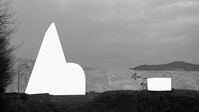
Monuments exist as loci of official history, designed to be resilient and permanent. However, the world around them is in constant flux, questioning their continued significance. Drawing on fieldwork undertaken at monument (spomenik) sites in the former Yugoslav republics of the Western Balkans, together with archival sources, A Spectral Geology is a creative outcome of a continuing speculative investigation into sound and its potential contribution to alternative historical narratives. In imagining sound as a geological, sedimentary medium with the potential to transmit and sequester memory, it considers the possibility of hearing the murmured traces of the past through its excavation.

SAR 2021 presentation - Paulo Luis Almeida & Flávia Costa
(2022)
author(s): Jonas Howden Sjøvaag, flavia costa, Paulo Luís Almeida
connected to: i2ADS - Research Institute in Art, Design and Society
published in: SAR Conference 2020
An Ecology of Care provides a philosophical basis for developing practical and aesthetic ways to requalify and improve the experience of being-in-the-city. This experience involves the relationship with spatial boundaries that inform gestures in the urban environment, such as fences and walls or social and political limits; it also implies our being sensitive to temporal boundaries that tacitly shape our perception of the city, such as disposable architectures, working rhythms and natural cycles.
In this video paper, we focus on a common performance-drawing project, carried out in two different cities: Helsinki and Porto. Through several actions, we pretend to challenge the dichotomy between human gestures and natural cycles and address the complexity of the relationships between spatial boundaries and the idiorhythm of walking in the city. Our project begins with the premise that the observation of gestures allows us to understand the way we exist in the world. Also, the re-enactment of those gestures in art practice allows us to understand, in an embodied way, the existential and social changes we are currently undertaking.
In “Follow me”, a drawing performed on the fence surrounding the construction of the new KuvA (Helsinki), we problematise drawing as an act of care and relation, built upon idiorhythmic, embodied and communal gestures in a shared space. In “Insula Perdita” we re-enact the death of palm trees in the city of Porto and the inevitable natural cycles and changes that moulds the perception of the city as a frame and ecosystem.
Both practices explore approaches to the Ecology of Care as a frame for artistic research, through the geographical concept of Throwntogetherness: to perform/draw as a responsive relationship between human and non-human (objects, plants, animals) to emphasize the interdependence between non-human and everyday life gestures in building the value of communality.