UTOOPPISTEN RUUMIIDEN VILLI PYÖRÄILY
(2021)
author(s): Vappu Susi
published in: RUUKKU - Studies in Artistic Research
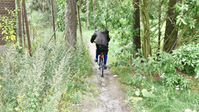
Pyöräily tapahtuu osin pyöräilijän subjektiivisen ja affektiivisen elinpiirin (Umwelt) määrittämässä utooppisessa ulottuvuudessa, vain osittain näkyvään maailmaan kiinnittyen. Vaikka uskoisimme kaikkien olevan kartalla, Liikenne työntyy hyperobjektisine lonkeroineen pyöräilijän kokemuksen päälle sisältymättä siihen täysin. Pyörällä liikkuja pelastautuu utooppisen ruumiinsa kautta toisaalle. Minne, sitä emme tarkkaan tiedä. Eräs utooppisen ruumiin sijainneista on toiminta villin pyöräilyn maailmassa. Se on utooppinen liikenneympäristön ylittävä olotila, jossa tuuli lennättää pyöräilijää, varikset raakkuvat tai sitten jotain ihan muuta.
On the Potential of Exercises in Live Art Pedagogy
(2021)
author(s): Kristina Junttila
published in: RUUKKU - Studies in Artistic Research
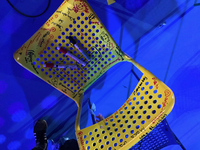
This exposition is a web of exercises which have been part of different participatory performances, -installations and -workshops. The projects were undertaken during the years of 2014–2019 and are part of my artistic pedagogical research about the potential of exercises in live art. By extricating exercises from their original context and placing them in a rhizomatic map alongside other exercises, I want to examine exercises as an important tool in creating the future of live art and new realities. A tool that can be used to create new performance art works and imagining the future. The exercises in live art pedagogy has potentials in imagining and creating new realities. Each exercise can also have value as an artwork in themselves, as a performance event score.
The exercises in this exposition can be looked upon as traces of earlier works, and by cross-contextualising the exercises I look for how they are interrelated and what the materiality or technique of an exercise can be. In this cross-contextualising I look for the agency of the different exercises. I have selected the active performative agents that best characterise fo the exercises. These are the formulation, objects, performer, audience, place, and time as such agents.
Aural Expectations of Home: An Autoethnography of the Amazon Echo Smart Speaker
(2021)
author(s): Stephen J. Neville
published in: Journal of Sonic Studies
The paper conducts an autoethnographic case study of the Amazon Echo smart speaker to explore problems of acoustical privacy at home. A gap in surveillance research is addressed by treating smart speakers as private social media platforms that connect users to sound, devices, and home environments. The concept of aural expectations of home is developed which expresses how dwellers live with and through sound. The paper argues that problems of acoustical boundary control in the domestic sphere not only help understand the communicative and socially connective aspects of smart speakers, but also illuminate surveillance issues as one’s sonic habits at home are rendered as data under the purview of corporations.
Materials of the Cinematic Language
(2021)
author(s): Rasmus Kloster Bro
published in: International Center for Knowledge in the Arts (Denmark)
This research project was conducted at the National Film School of Denmark.
Video Sketching as a Foundational Tool.
Video sketching in this context means working in audiovisual form to create an intermedia in the development of a proposed audiovisual work. It is a tool to create the foundation on which further development is based. It is also foundational, in the sense that it’s a method for working with qualities that are native to languages of cinema, and therefore difficult or impossible to manifest in words.
The research springs from a personal artistic praxis as a filmmaker, video artist, screenwriter and director with experiences from art installation, narrative fiction and cross-over documentary works, in a Danish and European art house cinema context.
HONEYMOON IN POMPEII - work in progress
(2021)
author(s): Sven Vinge
published in: International Center for Knowledge in the Arts (Denmark)
“HONEYMOON IN POMPEII – work-in-progress” is an artistic research project conducted at the National Film School of Denmark. In it, I explore transmediality through the production of a prototype artwork spanning film, literary text, sculpture, and virtual reality all loosely inspired by the archeological technique used to cast the Pompeian victims of the Vesuvius eruption in 79 ad.
I describe my initial inspiration and how I changed my intentions of exploring a consistent storyworld to more abstract associations and themes and the different collaborative efforts in producing the four parts of the prototype (a test not meant for public exhibition). The prototype ended up consisting of:
1) A film representing a foot specialist helping a costumer try running shoes in a sports store but showing an obsessive interest in her feet and crossing her personal boundaries.
2) A literary text consisting of selected passages of Wilhelm Jensen’s short novel “Gradiva” (1902) translated to Danish in which we meet the young archeologist Norbert Hanold and notice his obsession with an ancient bas-relief portraying a young woman walking.
3) A sculpture consisting of four transparent plastic reliefs depicting a walking woman (copies of the bas-relief described in the novel) suspended in a 1x2x2 meter aluminum frame.
4) An erotic virtual reality experience in which the perceiver’s bodily movements affects the virtual world. When moving, the represented scene freezes and vice versa.
We conducted a test of the joint transmedia artwork with a small group of respondents who answered a questionnaire reflecting on their experience. I reflect on the respondent’s answers and propose further questions and themes that may be interesting to explore through artistic research: How does one explore transmediality not necessarily in relation to a consistent storyworld but also relying on abstract characteristics? What are the limits (if any) between mixed media art, transmedia art, and installation art? How can transmediality be explored as either a goal in itself or as a development tool for artists working with particular media in mind? Could it be beneficial to explore transmediality through the metaphor of archeology and how?