Dissolving distances: Designing close-to-body experiences for remote settings
(2023)
author(s): Nesli Hazal Oktay
published in: HUB - Journal of Research in Art, Design and Society
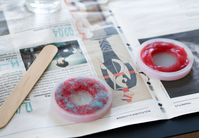
I aim to offer embodied intimacy for people who are close by heart but physically apart. Specifically, I explore designing close-to-body experiences at a distance through intimate bio-rings, rings made of natural ingredients. Intimate bio-rings are highly customizable, can be biodegraded, and start dissolving when exposed to humidity e.g.: rain, sweat etc. The idea of creating a non-lasting object to be worn on the body—that required care, that was ambiguous and tangible—was a result of a prior user study of cultural probing and embodied design ideation. I further experimented with intimate bio-rings by making the ring and wearing it in everyday life together with my father, whom I live far away from. In this paper, I showcase a user study with 3 pairs (6 participants) that made intimate bio-rings at their homes while self-reported and self-documented their personal experiences. They then further shared their meaning-makings with me through an interview. Overall, participants found intimate bio-rings to be supporting new understandings about intimacy at a distance. As a result, their experience of "distance" alters slightly or changes completely by i) embarking on a journey, ii) creating time and space to be together, and iii) carrying each other through a tangible object.
Dialogic Liminality: Cartographies of the Inbetween
(2023)
author(s): Rachel Horst, Andy Hoff
published in: Research Catalogue
A conversation is a mapping of the spaces in between and within subjectivities, geographies, environments, soundscapes, and silences (of voice and thought); in conversing we abide by certain rules of negotiation while breaking others of propriety, manner, logic. In this exposition we aim to explore and enact the liminalities that occur in an artistic dialogue over the course of a series of weeks and reflections. In our capacity as settler scholar feminist artists and researchers, we are interested in understanding and performing scholarship via artistic practice. For this exposition, we negotiated a series of rules for our weekly inquiry. These rules became the map through/by/against which we navigated and re/defined our scholarship, disciplinarity, and research practice. In this work, we create places of overlap and divergence in a fluid “feeling cartography” (Cram 2016), which is “a mode of encounter and trans-ing, entanglement and movement without destination or conclusive points of arrival” (143). This is also a performance of autotheory, which Fournier (2021) describes, as a term “for works that exceed existing genre categories and disciplinary bounds, that flourish in the liminal spaces between categories, that reveal the entanglement of research and creation, and that fuse seemingly disparate modes to fresh effects” (2). Liminality as a theoretical concept emerges out of a diverse body of entangled life work and struggle. We are thinking with those feminist scholars and artists of colour, Anzaldúa and others, without thinking over the specificities of experience. As Barad notes, “Anzaldúa understood the material multiplicity of self, the way it is diffracted across spaces, times, realities, imaginaries” (2014, 175). We take up this material multiplicity in our artistic practice through a lens of posthumunism, which we see as a theoretical pathway into those spaces between agencies and atoms that may simultaneously define and undo us.
Sounding the futures imaginary: A collaborative intra-modal storying methodology
(2023)
author(s): Rachel Horst, Kedrick James, Yuya Takeda, Esteban Morales, Effiam Yung
published in: Research Catalogue
The pandemic is not one coherent narrative but an unbounded multiplicity of narrative ravellings. One theme that can be traced through the course of the past two years is the undoings and redoings of normalcy, including normalcy in qualitative research. Our digital literacy research group took up the pandemic as a canvas upon which to story new futurities and possibilities for qualitative research in physical separation within the context of slow-moving upheaval. At the outset of the first physical lockdown in March of 2020, we began a collaborative and multimodal futures fictioning practice, storying new communicative possibilities and potentialities. Over the course of fourteen months, we reached into each other’s imagination, isolation, temporality, and physical environment via story and sound. This exposition charts our diffractive fictioning methodology, in which we collectively map communicative practices and collaborative meaning in virtual spaces in a time when coherence and consensus have become radically fractured. A cyborg skunk moves through this assemblage of poetry, sonification, narrative, performance, theory, and silence, flicking its many imagined tales and nudging its noses at the wreckage of the normal in search of difference.
Hidden Sounds of West Telemark / Løynde Lydar Frå Vest-Telemark
(2023)
author(s): Natasha Barrett
published in: Research Catalogue
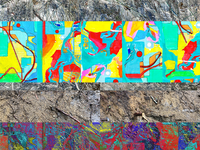
"Hidden Sounds of West Telemark / Løynde Lydar Frå Vest-Telemark" is a sound-art project consisting of seven short audio-visual compositions which can be thought of as sonic postcards. The project is about listening to the everyday cultural sound landscape in new and interesting ways. The work was exhibited at West Telemark Museum during the 2023 season.
How art made me (in)sane
(2023)
author(s): Nabila Ayu Aviani
published in: Research Catalogue
From the moment I was born, my grandmother said the following words to my mother about me:
“Be careful with this one, this child will be tough as a rock.”
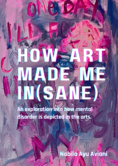
My grandmother was not wrong. I was a tough child – I am a tough child. It was not until later during my teenage years that I was diagnosed with the disorders that would completely shift my world. I spiralled down deeper into agony and self-destructive behaviours. My mental health consistently deteriorated, my disorders consuming every bit of me, and I felt insane.
In art, I found my escape. Through Edvard Munch, a mastermind who was able to decipher and express his troubles in art, I felt less alone. Unable to cope with my intense emotions, I have always been convinced that I am, in one way or another, insane.
And for the first time, through art, I felt somewhat sane.
Minor Creative Research for Change - Veerle van Boom
(2023)
author(s): Veerle van Boom
published in: Research Catalogue
Hoe kan ik vanuit mijn vakgebied bijdragen aan een betere communicatie op stressvolle en emotionele momenten?