The Research Catalogue (RC) is a non-commercial, collaboration and publishing platform for artistic research provided by the
Society for Artistic Research. The RC is free to use for artists and
researchers. It
serves also as a backbone for teaching purposes, student assessment, peer review workflows and research funding administration. It strives to be
an open space for experimentation and exchange.
recent activities <>
The Ash Sheet
(2026)
Giusirames
Abstract
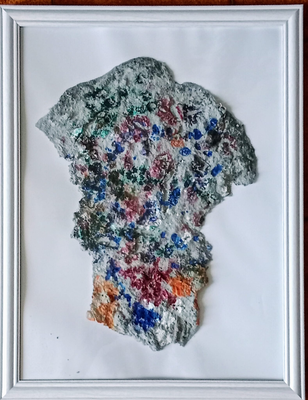
This thesis analyzes an original technique based on the transformation of ash into a self-supporting sheet suitable for charcoal drawing. The process, based on the use of sifted ash and powdered wallpaper paste as a binder, generates a lightweight, porous mineral support with a unique tactile quality, similar to a “combustion skin.” The research examines the technical, aesthetic, and conceptual dimensions of the material obtained, placing it in the context of contemporary art and practices that aim to stabilize ephemeral residues. The ash sheet is interpreted as artificial geology, a sediment constructed by the artist, and as a poetic device that intertwines memory, combustion, and rebirth.
THE SOUL AND BODY OF PAINTING
(2026)
Giusirames
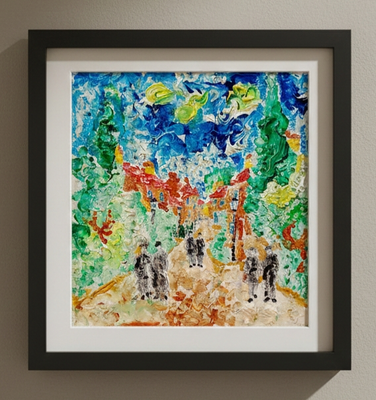
This research stems from the need to give theoretical, methodological, and poetic form to a practice that has developed over time through intuitive experimentation, phenomenological observations, and a direct relationship with the material. The aim of this thesis is to define, analyze, and formalize a new painting technique based on a reactive mixture and a vortex modeling gesture, a technique that is not limited to using heterogeneous materials, but generates real visual phenomena: currents, stratifications, turbulence, figurative emergences.
This technique arises from the encounter between everyday materials—malleable glue, transparent glue, toothpaste, Amuchina hand sanitizer, and pigments—and a specific gesture: the rotation of a cut brush that does not spread the color but sets it in motion, forcing it to react, organize itself, and take shape. This gesture is complemented by a final incision, made with a small object, which does not draw but frees the figure from the material, as if it emerged spontaneously from a dynamic field.
The resulting painting is not representation but event. It does not describe a subject: it lets it happen.
Glass Cities : Venice Revisited
(2026)
Zoe Panagiota (aka Betty) Nigianni

The exposition includes reworked video excerpt from the 'Glass Cities' two hour-long video art installation, with film footage and photography from three different cities, London, Athens and Venice. The original work was created for Elica's live music performance, shown at the Small Music Theatre, Athens, Greece, in 2007.
The aim of the process of making the video art was to remain and explore the surface of things when addressing historical changes. I used banal and seemingly unconnected photographic and digital film footage for this purpose and effect. The 'lure' is the film still: neither photograph, nor film, a notion that has been inadequately theorised in visual art history and theory.
Following a historical materialist approach, I employ the artistic theme of dead cities. Venice is a dead city in the visual arts modernist tradition. A dead city is a city that fails to change. Venice is actually slowly sinking, because it can't manage the rising water levels. In this context, I briefly trace Venice's economic history of the flourishing academic arts in the Baroque period, its Murano glass industry evocative of the ancient arts and crafts, and its inevitable re-invigoration by virtue of the Venice Biennale, the well-known international art and architectural exhibition.
I named the original video art after John Smith's experimental documentary about London 'Slow Glass' (1988-91). In the film, one of the narrators describes the liquid composition of glass - "even when it's hard, it's still a liquid" - which is a metaphor for the process of change.
Since I made the video installation, but also this exposition, I found out that my ancestor, a great grandfather, who was originally from Italy, might have been an Italian Jew and that this might have been the reason he left Italy in the nineteenth century to travel to and settle in my native Greece. Because the exposition is about collective history and collective consciousness, the research video could be taken as a reminder of the factual, global rise of antisemitism in the twenty-first century; in Italy represented by the extreme right-wing, neofascist political group Forza Nuova. The country that has seen the most prominent rise in antisemitic ideology is the United States of America.
recent publications <>
Paths of Artistic Research
(2026)
Silvia Diveky, Monika Šimková
Interviews about where artistic research is heading
The work Paths of artistic research is a collection of interviews with artistic researchers - Andrea Buršová, assistant professor at the Nika Brettschneiderová Dramatic Acting Department, Faculty of Drama, JAMU, Jiří Honzírek, director, manager of the Feste Theatre and PhD student at the Theatre Faculty, JAMU, Barbora Klímová, head of the Studio of Environmental Design at the FFA BUT, Lenka Klodová, head of the Studio of Body Design at the FFA BUT, Lucia Repašská, researcher at the Cabinet for Theatre and Drama Research, Theatre Faculty, JAMU, Hana Slavíková, head of the Studio of Radio and Television Dramaturgy and Scriptwriting, Theatre Faculty, JAMU, Pavel Sterec, artist and former head of the Intermedia Studio at the FFA, BUT, and Lenka Veselová, researcher at the Department of Theory and History of Art at the FFA, BUT and PhD student at the FFA, BUT. These are artists who have been associated with art colleges in Brno, specifically with the Faculty of Fine Arts of the BUT and the Theatre Faculty of the JAMU. Through interviews with the artists, the reader will learn under what circumstances they began to engage in artistic research, how they perceive it, what meanings they attribute to it and the purpose it serves for them. The selected group of artists is very diverse and their creative and research strategies are different, as are the purposes for which they use artistic research. The work does not aim to provide an exhaustive overview of the methods used in artistic research, but it does aim to show that there are many approaches to artistic research and to present the paths that have brought particular artists to artistic research.
Berlin, lava fields, rebellion, street life
(2026)
Ilpo Jauhiainen
This essay examines the challenges of generative AI in composing ‘new’ music. The focus is on the commercial generative AI applications (i.e. AI music generators) due to their prominence in the mainstream cultural and technological discourse. The essay adopts a philosophical rather than a technological approach, situating the use of generative AI in music within a broader societal, cultural, and environmental context. If AI and music (understood as normative practices) are majoritarian, molar, and arborescent entities, then the approach taken here is Deleuzian: minoritarian, molecular, and rhizomatic. By engaging with their fault lines, disassembling and reassembling their structures, and connecting them to the wider world, the essay presents an alternative way of thinking about AI and music – and AI in music – and proposes one such possible application.
Sound, Performance, and Technology: Considering The Foley Grail
(2026)
Sara Pinheiro
Vanessa Theme Ament’s "The Foley Grail" was, for a long time, the only publication to discuss in detail the art of film sound effects (foley). In this issue, we review the third edition of the book while in dialogue with the author herself.