quiet citadel
(2022)
author(s): Ryan Evans
published in: Research Catalogue
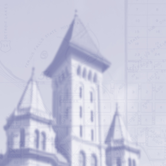
'quiet citadel' is a site-specific, participatory music project that examines music-making and the purposes that music can serve. I made 'quiet citadel' as part of the Hinge Arts Residency with Springboard for the Arts. They describe the fellowship as a community development program that activates arts programming related to the historic Fergus Falls State Hospital, or "the Kirkbride."
Presented in four sections, this exposition offers a case study of how I instrumentalized my music-making and music-sharing to assist the residents of Fergus Falls, a small town in rural Minnesota, in determining what to do with the disused Fergus Falls State Hospital, or "the Kirkbride." All told, this exposition provides an example of using music as a research method for the purposes of collectively imagining the future of a community asset.
The Creatures Archive
(2022)
author(s): Shana
published in: Research Catalogue
An archive of found images (and sometimes personal observations)
These images are fragments of beings that exist together as several, heaving heaps of genderless sci-fi characters, swimming around in a world.
You will find organisms such as (memes, cryptids, species with Latin names, pop culture toys)
Territorial Art, Design & Architecture
(2022)
author(s): Sergio Montero Bravo
connected to: Konstfack - University of Arts, Crafts and Design
published in: VIS - Nordic Journal for Artistic Research
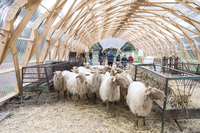
This collaborative and cross-sectoral project addresses places, environments and spaces beyond mere functional urban endeavors. The project explores possibilities that become visible when public space is viewed from perspectives beyond the urban norm. The aim is to restore lost rural relations and to search for ways to leave the anthropocentric narrative. In the past, densification of cities has been considered synonymous with sustainable development, creativity and innovation. However, a one-sided urban focus leads to disarmament of rural habitats, and dissociation from human interdependence with non-human nature. Today, adaptation to global warming is dependent on the survival of the rural. Therefore, this artistic research project is primarily informed by activities in rural environments together with species and ecologies other than human and urban. The goal is to investigate how art, design and architectural interventions can foster oppositional narratives to anthropocentricity. What I present in this exposition are my most recent collaborations and a journey of professional metamorphosis to reach this goal. The result is a series of ongoing projects and processes that demonstrate how I explore places of communality, togetherness and mutual beneficial interdependency between species.
Fragments in Time
(2022)
author(s): Tobias Leibetseder, Thomas Grill, almut schilling, Till Bovermann
published in: VIS - Nordic Journal for Artistic Research
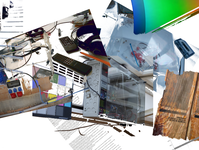
The processual sculpture "Fragments" is in permanent development and consists of artefacts of the "Rottings Sounds" project of artistic research*. Waste, things collected, things stored and things put aside, texts, pictures, data, sounds etc. are the basis of the shape-changing work. It is located at the Auditorium of Rotting Sounds. For this exposition, media representations of physical fragments have been arranged, then subjected to multiple stages of erosion processes specific to digital data. Object or exhibition, museum or archive, collection or documentation are moments of intrinsic research and decomposition, accompanying the process and resting in the distant but immediate eye of the virtual observer.
*"Rotting Sounds – Embracing the temporal deterioration of digital audio" is a cooperation of the mdw – University of Music and Performing Arts Vienna, the University of Applied Arts Vienna and the Academy of Fine Arts Vienna. It is funded by the Austrian Science Fund (FWF) as project AR445-G24.
Ta Form
(2022)
author(s): Klara Waara
published in: VIS - Nordic Journal for Artistic Research
This research, developed in Amsterdam during the repeated courses of lockdown between 2020 and 2022, examines the powers and limitations of fantasy. Processing the mental and ideological undercurrents in Europe, the text describes a trajectory where the visual artist appropriates the role of a poet to explore the possibilities for change and movement in isolation. As thinking, reading and writing alters the protagonist, the appropriating artist becomes appropriated by language. The gradual blending with the observed subjects raises questions about the distinction between the internal and external.