The Research Catalogue (RC) is a non-commercial, collaboration and publishing platform for artistic research provided by the
Society for Artistic Research. The RC is free to use for artists and
researchers. It
serves also as a backbone for teaching purposes, student assessment, peer review workflows and research funding administration. It strives to be
an open space for experimentation and exchange.
recent activities >
Operafrø / seed
(2026)
Lise Hovik
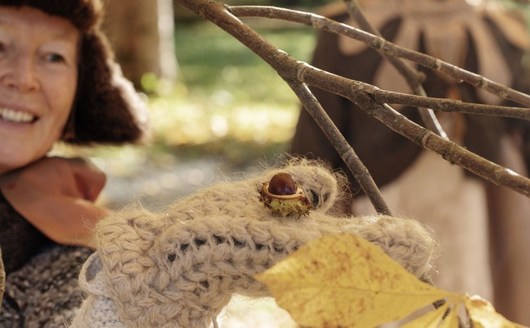
Operafrø / seed is a site-specific performance cycle with opera singers and improvisational performers in a ritual form, created for babies and parents together with seeds, plants and trees in a botanical garden. Through a playful and free improvisational musical approach to creating art for the little ones, we have, based on Vivaldi's Four Seasons, created a baby opera for the smallest seeds, both human and plant seeds. Babies have their own little big voice, which can be said to be a sprout for the adult big voice. In the span between the baby voice and the opera voice we can hear that a string is ringing!
During the four seasons in Ringve Botanical Garden through 2023, and together with the audience of babies and parents, the artists have investigated seeds, sprouts, plants and trees through rituals, play and theater in sympoetic (Haraway) co-creation with nature, song, rhythms, babies, and parents.
Works for solo violin and viola. Exploring long-term collaboration with David Matthews
(2026)
Peter Sheppard Skærved
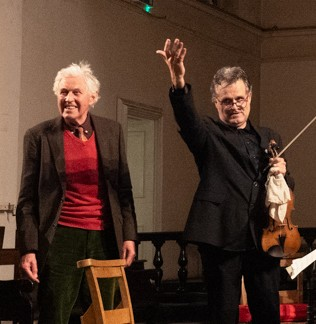
I have collaborated with the composer David Matthews for over thirty years.
This exposition focuses on the ideas and insights that result from our long-term work together on music for violin (and viola alone. Matthews's output in this arena is prolific, and 2/3rds of his solo works have been written for me.
Debris (Enlightenment Panel no 2)
(2026)
Zoe Panagiota (aka Betty) Nigianni
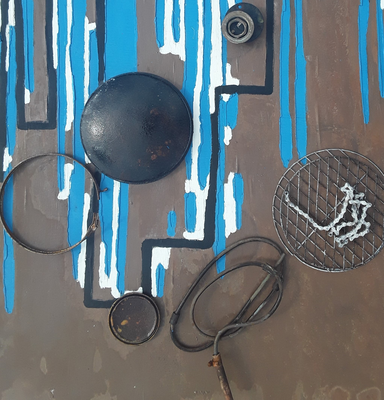
Sculpted and painted wood, combined with treated rusty objects. Duct tape with boat paint models for metal sheet sculptures, 2020. Digital drawings, 2021, 2023. Dutch steel sailing boat part-restoration and renovation, Amsterdam (with Sean A. Hladkyj), 2019 until summer 2020.
I exposed relief and improvised sculptures made with industrial paints, as well as found objects, to weather conditions, including heavy rain and wind, over a few months on a floating timber raft. Working with the changes the weather was causing to the ad hoc studio, I made changes until the painting was finished, photographed, then dumped. Someone collected the relief. I applied the colours from those available in a symbolic manner, abstracting the view of a ghetto in a large city. The objects stand for the landmarks.
The pieces would comprise of the scenography for a theatre performance, informed by my conversations with a theatre lighting technician. The performance would also include a donation event of the art objects. See external link for the theatre play, based on the tradition of the philosophical dialogue and employing the idea of performing philosophy to make it accessible to a wider audience.
Political asylum has been traditionally offered to people who flee from their countries of origin and citizenship, because of violations of their dignity, which is a human right, and other basic human rights, such as safety and liberty, due to their political beliefs and related activities, if any. Currently, seven human rights of mine, five basic, have been infringed in the United Kingdom, where I have been a citizen since 2011; the origin is my native Greece. Political asylum is only offered to people, who are non-citizens of the country where asylum is sought from. At the same time, political asylum has become harder to offer, due to the global nature of persecution of whoever is perceived as a dissident by authoritarians.
Since 2020, Forza Nuova, the Italian affiliate of the Greek Golden Dawn, with contacts in the Middle East, specifically Hezbollah, has participated in the organised international criminal case, of which I have been the target, originating from my native Greece, "accelerating" in the Netherlands and the UK in 2020, Covid-19. This happened with the theft of my personal details, specifically my Greek driver's license number, by Italians, in Amsterdam, in the winter of 2020. My number was used on four fake Italian driver's licenses,in my name known as (aka), for criminal activity in the UK. My name known as (aka) was also used on four fake Italian passports for fictitious female Albanian citizens, succeeding two fake Albanian and a fake Kosovo passports for three of the four Greek teenage users, with different details than the fake Italian ones, which three of the four teenagers had: the youngest one, also had another fake Albanian, preceding the fake Kosovo, again with different details than the other fakes she had. A deceased Belgian filmmaker's, Chantal Akerman's, life and health insurance was falsified by the use of the two fake Albanian passports in 2018 and extended with the fake Kosovo, for the youngest, in 2019.
Forza Nuova is suspected of being connected to two abductions: one domestic of an Italian citizen circa 2020 and one in Holland of a Spanish citizen circa 2022.
Notably, Roberto Fiore, Forza Nuova's neo-fascist leader, inherited briefly Alessandra Mussolini's post in the EU parliament. All the more so, after mediation with the Albanian government, the Italian government settled in the autumn of 2024 one remaining fake Italian passport for a fictitious Albanian citizen, probably in connection with Golden Dawn, who had their own three MPs in the EU parliament. Rumours have it that Fiore was once upon a time an MI6 agent. It is confirmed that he has ties with the British National Party (BNP), the British XRW component.
Italian Jews, including Greco-Italian Jews, were persecuted by the Catholics and almost exterminated in the late nineteenth century. My great grandfather, from my father's side, with the first name Gianni, went to my native Greece, from the North of Italy, around that time, He became Hellenicised and adopted the Greek Orthodox religion. We don't know his surname.
The Jews is the archetypical diasporic population historically speaking.
The Holocaust and the Slavery past are the black marks of modern historical times.
Drawing on the philosophical notion of impossible objects, the works attempted an indirect postcolonial critique: a suggestion for alternative, autonomous and communitarian lifestyles; and a performative metaphor for global refugees of all kinds. At the time, in autumn 2019, I had attended an environmental protest in Amsterdam that was generally peaceful.
Investigatory research with artworks, some of it carried out in Amsterdam, the Netherlands, where I was a philosophy student, from 2017 until late 2019, and remained until the beginning of autumn 2020. I did not have student insurance, as it was obligatory, because I was covered by the NHS through EHIC (European Community coverage), while the UK was still in the EU. I didn't have travel insurance either. Dutch travel insurance, under the reference number E111, was opened by unknowns on my behalf in the summer of 2020, to cover the expenses of routine women's healthcare and family planning tests, but was closed as fraudulent after I reported to the Dutch fraud authority that I didn't open it myself; neither I had any knowledge about who might have done that.
The exposition also showcases and juxtaposes a performative video, drawings and other visual art, by "Mohammed", aka 'Onzedouze', an investigator, who turned his hand to art, in order to record and communicate, in an improvised, codified , but still artistic manner, what was of interest to him with regards to a relevant investigation.
The title "Enlightenment Panel" comes from Peter Sloterdijk's 'Critique of Cynical Reason', published in 1983, which critically discusses philosophical and popular cynicism.
See exposition, also in connection with expositions under 'Art and Activism Exposed as Research Blog'.
recent publications >
Cruising with Craft to the Ends of the Worlds: Practices of shattering, becoming scyborg and dancing with dragons as possible cartographies
(2026)
lambert
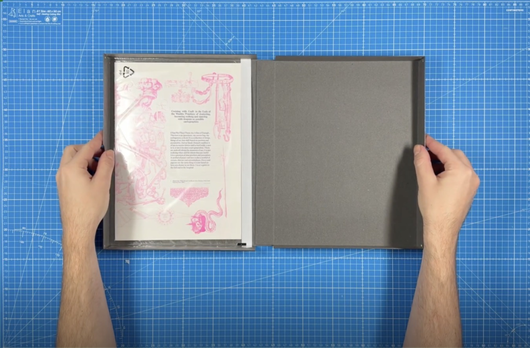
Cruising with Craft to the Ends of the Worlds: Practices of shattering, becoming scyborg and dancing with dragons as possible cartographies is an investigation of cruising with craft as a companion to explore how its languages and discourses contribute to processes of equity such as decolonization and can challenge ivory tower academic structures through its cracks and margins, the place of the undercommons. Thinking with craft becomes essential in scyborgism. As la paperson defines in A Third University is Possible a scyborg "is a queer turn of word that I offer to you to name the structural agency of persons who have picked colonial technologies and reassembled them to decolonizing purposes." la paperson uses the scyborg within the academic institution to use the resources given for decolonial purposes when reconfigured. There is interest in how this idea can be expanded to other institutions such as the archive and the museum as well as the academy and artistic practice-based research with craft as a companion. Craft becomes crucial for its direct connection to the colonial framing of human and non-human and forces the consideration of the individual as well as the collective simultaneously.
Collaborating and kinship making with artists and institutions of a vast array of disciplines has the potential to reassemble or reconfigure the current cultural systems of queerness and body politics while shattering the boundaries academically imposed on craft as a field. Unpacking the witnessing of toxic intimacies and the embedded systems of oppression rooted into the geological strata of cultural institutions as unpacked by Kathryn Yousoff, there is an urgency to develop ways to disrupt and subvert these mechanisms. lambert deploys the shoal or sandbar in reference to the work of Tiffany Lethabo King’s work The Black Shoals: Offshore Formations of Black and Native Studies to allow for constant shifting(s) and assemblage(s) to produce vibrations, meanings and embodied understandings. Through Natalie Loveless’s development of polydisciplinamory, a chimerical practice of making, collaborating, writing and curating creates systems for platform building and methodologies to talk with and not at, in regard to the othered body. These methods centralize joy and pleasure, making them crucial in developing alternative models of institutional existence.
The thesis is comprised of a miscellany of compositions such as texts, images, objects and prior publications that have been assembled together to form this publication with Patrick Lacey and Jens Schildt. In this, there is no ending, no beginning, no index, only choices to be made and actions to be considered. The process of this assemblage marks a moment where work becomes material, context and tool for cruising once again. The person who encounters this becomes the research, acting in solidarity with Loveless’ resistance to the monography that explains and instead centers the value and importance of practice as the research itself.
Making in Practice
(2026)
Fionnbharr Ó Súilleabháin

Thesis / Research Document of the Royal Academy of Art, The Hague, 2023.
BA Fine Arts
This paper is my submission for the Graduate Research Paper, a requirement as part of the Bachelor in Fine Arts at the KABK. The paper examines the idea that an art practice based on making is an alchemical practice. I explore how, in the heyday of alchemy, artisans working away in workshops to produce artefacts through a bodily engagement with materials, were seen as alchemists. I describe more modern theories of making, taken from the Humanities, to show that they are really describing a continuation of this same way of working – the search for what Pamela Smith has termed an artisanal epistemology. I examine how alchemy might be incorporated into an art practice. It is evident there are two principal ways in which artists engage with alchemy, and I classify artists as being either Borrower, Adept or a hybrid of the two approaches. Finally, I present 3 bodies of work in which I have engaged with alchemy in my own practice.
It Is Indeed a Dance
(2026)
Polina Masevnina
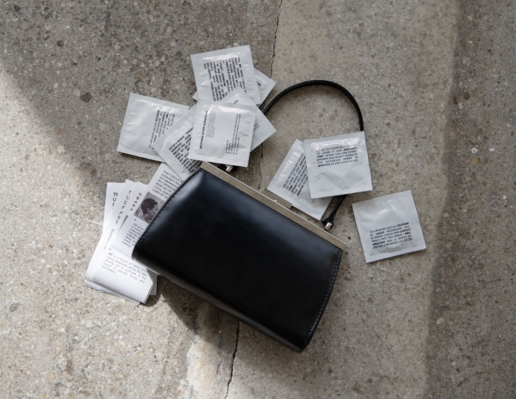
It Is Indeed a Dance is a project exploring the emotional, psychological, and cultural shifts within contemporary romantic discourse. Using the metaphor of dance as a dynamic, often asymmetrical interplay between self and other, the project investigates love and post-love conditions marked by ambivalence, hyper-awareness, and emotional fatigue. Drawing on concepts such as limerence, attachment theory, fantasy bonding, and “situationships,” it examines how psychological language has entered everyday dating vocabulary—shaping not only how we talk about love, but how we experience it. Through autotheoretical writing, visual media and spatial compositions, the project seeks to map and mediate intimate dynamics in an era where connection feels both over-analyzed and elusive. It reflects on the contradictions of contemporary intimacy, where vulnerability is praised but rarely safe, and communication is vital yet often ineffective in post-romantic conditions.