RAD2024
(2025)
author(s): Priska Falin, Alejandra Vera, Vilja Achté, Müge YILDIZ, Alexandra Zambrano, Amy Gelera, Seo Young Lee
published in: Aalto University
Research Through Art & Design course introduces a variety of approaches, methodologies, issues and concerns in research through practice. In this course, research through practice refers to a broad continuum of artistic research approaches, arts-based, practice-led and -based research approaches, including also constructive design research approaches that are relevant across practices in Aalto University ARTS School of Arts, Design and Architecture.
This exposition was created within an Artistic Practice Workshop offered as an additional part of the main course. During this part of the course, the students are familiarised with the Research Catalogue. During the workshop, participants work on their page within a group exposition, drawing connections between the creative and the given or discussed literature from the course and their creative practice.
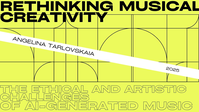
RETHINKING MUSICAL CREATIVITY: THE ETHICAL AND ARTISTIC CHALLENGES OF AI-GENERATED MUSIC
(2025)
author(s): Angelina Tarlovskaia
published in: Research Catalogue
As artificial intelligence continues to advance, its role in the creation of music has raised profound questions regarding the nature of authorship and the ethical implications of algorithmic composition.
Exploration of a fast-evolving relationship between music and AI broadens researches` horizons on the transformation of creative processes and the challenges it presents to traditional creativity. Delving deeper into the ethical considerations surrounding the ownership, originality, and emotional authenticity of machine-created music plays an important role in the understanding of modern music industry and helps to navigate creative development in today’s reality.
Ongoing ethical aspects of AI presence in music and creative industry show the importance and actuality of this topic.
This paper aims to provoke a deeper understanding of how AI is reshaping musical creativity and to encourage a critical dialogue about the future of art in a digitally driven world.
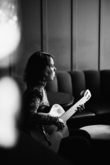
Building Bridges, Exploring Identity: A Musical Journey of a Brazilian Cantautora in an Intercultural Context
(2025)
author(s): Clara Gurjão
published in: Research Catalogue
This thesis presents the outcomes of my artistic research conducted as a master’s student in the Improvisation and World Music Performance program at the Academy of Music and Drama, University of Gothenburg, Sweden. The present study investigates how a musical identity is constructed and reshaped over time, drawing from my background as a Brazilian singer, guitarist, and songwriter, and examining how exchanges with musicians from different fields and exposure to new artistic inputs can influence my creative practice. Central to the research is finding tools to broaden my expressive possibilities within the song format, through the integration of improvisation, diverse ensemble instrumentation, and inventive strategies for communicating artistic intentions and political concerns through music and stage performance. This work also explores possible approaches for overcoming creative blocks and performance-related fears, especially those related to improvisation, seeking to cultivate a state of freedom, openness, fulfillment and joy while playing.

The Sound Horizon: multilayered composition for headphones and loudspeakers
(2025)
author(s): Alam Hernández / Blarewolf
published in: KC Research Portal
Music is bound to space; music happens in a space. There cannot be music without space, still, the vast majority of music throughout history has been mainly focused on "what happens when" rather than "what happens when and where.”
Today, with the advent of Virtual Reality, Dolby Atmos, binaural recording, and surround systems musicians and listeners are developing a more refined sensitivity and creativity toward sound localisation and spatialisation. Space is gradually attaining greater significance in the way we perceive and conceptualise music. Moreover, the introduction of headphones into the audio market substantially affected the way we perceive music today.
The present work describes the creative process and the results of two electronic music pieces for speakers and headphones which were composed for exploring the perceptual thresholds in which musical materials are perceived as connected or disconnected from each other.
I hope this work ignites curiosity in the reader, inspires creation, and motivates reflection on the meaning of space, connection, and isolation.
DISCLAIMER: The webpage takes some seconds to fully load.
Editorial
(2025)
author(s): Orlando Vieira Francisco, Maria Manuela Bronze da Rocha, Filipa Cruz
published in: HUB - Journal of Research in Art, Design and Society
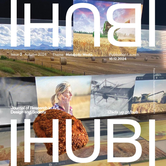
VARIA, the fourth issue of HUB — Journal of Research in Art, Design and Society is a compilation of insightful views on different subjects that drive us through expositions where the true interests and concerns and research of those who enjoy sharing their points of view to build an understanding of the meanings of contemporary art on a global level are presented. This edition presents a constellation of voices, gestures, and research paths that intersect across diverse geographies, temporalities, and concerns.
Editorial
(2025)
author(s): Louise Carver, jamie allen, Filipa Cruz, Maria Manuela Bronze da Rocha, Orlando Vieira Francisco
published in: HUB - Journal of Research in Art, Design and Society
The essays and expositions in this issue of HUB delve into the concept of Metabolic Media, exploring the interconnections between biological, technological, cultural, and ecological systems. Together, they offer a rich tapestry of perspectives, illuminating how processes of exchange, transformation, and interaction underpin the idea of media as metabolic and metabolising. Through this metabolic mosaic, this special issue of HUB presents a dynamic and interconnected view of metabolic media, celebrating how media processes reflect and influence the metabolic flows of life itself. Each contribution invites readers to rethink how artistic, scientific, and technological practices can illuminate the entangled systems that sustain and shape our shared existence. Against a background of shifting, strained or even pathological metabolic relations across scales, forms, zones and bodies, these reflections and interventions intersect with media techniques and technologies as traditionally conceived and emergent, immanent and immediate metabolic flows systems and processes.