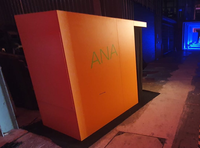
In Sync With A Machine
(2026)
author(s): Ilja Mirsky, Leonid Berov, Gunter Loesel
published in: ArteActa – Journal for Performing Arts and Artistic Research
This paper delves into the dynamics and dramaturgical specifications of ANA, a theatrical installation engineered for co-creating narratives in a dialogic process with individual users. ANA embodies a collaborative storytelling environment that is used to communicate narrative and emotional information through multiple modalities, thereby bringing into focus an unexpectedly human essence in a human-machine interaction. Integrating GPT-4, emotion-recognition algorithms and a simulation of its own affective state, ANA engages users in a 10-minute interaction, fostering an immersive narrative exchange where the affective dimension of collaborative storytelling takes precedence. This paper explores the specific challenges of prompt design in this setting, focusing on the concept of emotional attuning, the feeling of being “in sync” with a machine throughout the interaction. Through an analytical lens encompassing cognitive science, philosophy of mind, and prompting techniques, the authors describe and reflect practices of employing multimodal sensorial data such as emotion recognition, and dramatic considerations, into the process of designing prompts. They also describe and reflect on their attempts to establish a form of meta-communication with the machine about the emotional aspects of the experience. By focusing on dramaturgical and improvisational strategies, this paper underscores the pivotal significance of emotional attunement and multimodal communication in fostering intimate technological engagement.
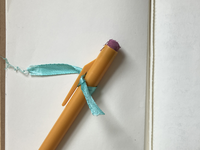
AI gave me an assignment, and I did it. Now what?
(2026)
author(s): Brett Ascarelli
published in: ArteActa – Journal for Performing Arts and Artistic Research
How useful can AI be at this present moment to generate assignments or instructions to teach and train people to live more playful, creative and ethical lives? In this artistic research, I try to put aside fears of a dystopian future in which runaway AI assumes control over humanity, and suspend them long enough to play with the idea of reversing the usual dynamic: what if AI were to instruct us, instead of us instructing AI? What kind of positive outcomes could emerge? I borrow from traditions of instruction art and avant-garde art, and I employ discursive practices that alternate between techno-enthusiastic and techno-skeptical. The AI tool ChatGPT and I hold conversations in which we explore the research question together, and in which I prompt ChatGPT to issue me instructions, then I describe the process and result of executing the instructions.
Unsettled Subject: From Emancipation to Separation
(2026)
author(s): Martin Pšenička
published in: ArteActa – Journal for Performing Arts and Artistic Research
This essay is inspired by the contributions to this issue, whose common denominator seems to be the transformation of the nature of authorship and the position of the authorial subject, reflecting the broader theme of the position of the subject in the contemporary world. Some authors, responding to ArteActa’s previous call for submissions, “AI (and) Art: The Poetics of Prompting,” explore the changing conditions of artistic work with AI, while others focus on the interaction between materiality and human perception. All raise urgent questions related to the concept of the subject and the connection between the perceiving mind and the surrounding world. Through a historical reflection of poetics as the art of “prompting,” the text addresses theoretical conceptualization of the subject, in which emancipation at the level of the perceiver plays an increasingly important role. With the advent of AI as a “separate intellect” (Agamben 2025), the emancipation and transformation of (creative) subject raises questions stemming from today's paradox, in which all important and necessary emancipation efforts seem to be distorted or lead to tendencies that brutally contradict them. In this context, does AI bring about the final stage of the emancipation of the subject, or does this autonomous intellect enable hedonistic ochlos-authorship? Without reviving the laments of the past, the essay attempts to point out the fragility and uncertainty of the subject facing unprecedented pressure.
Erratic and Erotic Voice-led Composition (PhD)
(2026)
author(s): Adriana Minu
published in: Research Catalogue
This is a practice-based artistic research PhD which investigates ways of being with intensities felt in the body and of artistically integrating them into sonic expression. It aims to do so by building sensory precision particularly through use of the voice. I consider voice as a somatic tool that aids in feeling these intensities, and that helps build knowledge about the self and its situated context. I put this sensual knowledge in contact with existing theories of affect and atmosphere, introduce the idea of ADHD selfhood and draw these together in presenting the practice of erratic and erotic voice-based composition. I discuss the processes of making and contexts around twelve distinct and diverse instances of artistic practice that include participatory works in one-to-one or small groups, co-creative duos, small group workshops and ensemble work. I foreground here not just embodiment but the specific body that has done this research, moving through a neurodivergent intersectional complexity that refuses identarian precision, preferencing a tenacity of feeling that invites witnessing and companionship as ways to get to know it.
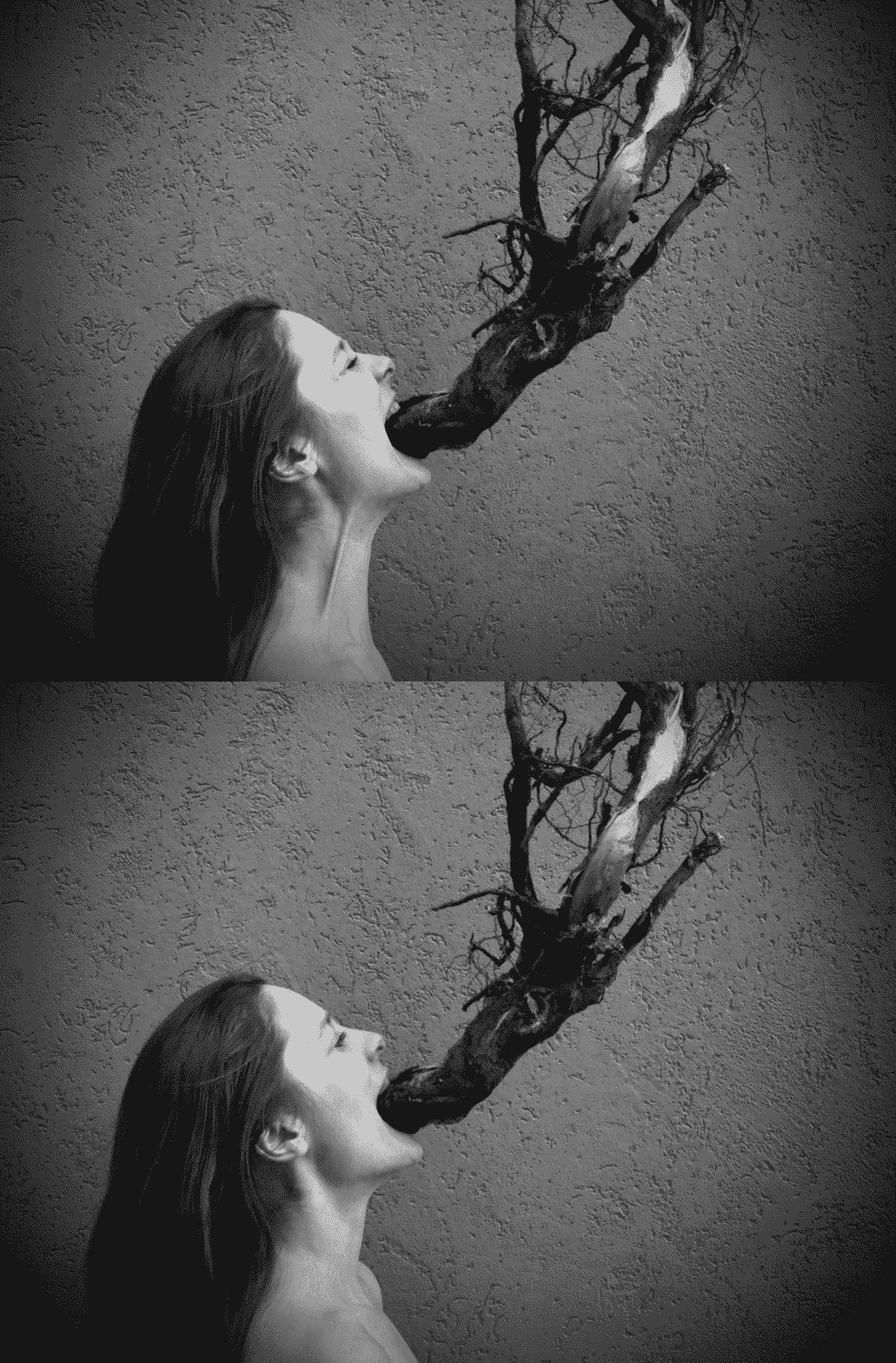
how to strike roots into the void – a trapeze artists view on artistic processes as permacultural growing
(2026)
author(s): Carmen Raffaela Küster
published in: Research Catalogue
This project researches body and object relationships through practical exploration (practice-led research) in suspension and on the ground. It illuminates connected thoughts linked to posthuman philosophy, permaculture, physical movement and contemporary circus.
Our perception of the world is getting more global and connected, but we have not realised yet the full complexity of all the interdependencies and interplays. In fact it is more than questionable whether this might be graspable for any human to its full extend at all…
The state of being ‘in suspension’ is taken as an analogy for the times we live in – life itself. In a world in which pop-stars sing ‘I have no roots’ (Merton, 2016), mass-migration makes people leave their homes involuntarily and others choose nomadic livestyles that leave them only loosely connected with a geographical place and a single culture. But at the same time, we are always tightly connected (digitally) with ‘the whole world’.
'How to strike roots into the void?' is the essential question of this interdisciplinary research, which has its roots deep 'down' in aerial acrobatic movement. How could this rooting be possible at all? And in which ways? – referring to the question of quality: 'HOW' can we in these times as human being strike out our own roots? Who and what can keep us grounded? To whom or what are we reaching out to search for connection? What nourishes us? And where to hold on to, if the substrate is emptiness – the Void – the uncertainty of life itself?
Desenho e Performatividade
(2026)
author(s): Clara Ginoulhiac
published in: Research Catalogue
Página de arquivo de documentação relativa à disciplina Desenho e Performatividade