Paths of Artistic Research
(2026)
author(s): Silvia Diveky, Monika Šimková
connected to: Janáček Academy of Performing Arts (JAMU)
published in: Research Catalogue
Interviews about where artistic research is heading
The work Paths of artistic research is a collection of interviews with artistic researchers - Andrea Buršová, assistant professor at the Nika Brettschneiderová Dramatic Acting Department, Faculty of Drama, JAMU, Jiří Honzírek, director, manager of the Feste Theatre and PhD student at the Theatre Faculty, JAMU, Barbora Klímová, head of the Studio of Environmental Design at the FFA BUT, Lenka Klodová, head of the Studio of Body Design at the FFA BUT, Lucia Repašská, researcher at the Cabinet for Theatre and Drama Research, Theatre Faculty, JAMU, Hana Slavíková, head of the Studio of Radio and Television Dramaturgy and Scriptwriting, Theatre Faculty, JAMU, Pavel Sterec, artist and former head of the Intermedia Studio at the FFA, BUT, and Lenka Veselová, researcher at the Department of Theory and History of Art at the FFA, BUT and PhD student at the FFA, BUT. These are artists who have been associated with art colleges in Brno, specifically with the Faculty of Fine Arts of the BUT and the Theatre Faculty of the JAMU. Through interviews with the artists, the reader will learn under what circumstances they began to engage in artistic research, how they perceive it, what meanings they attribute to it and the purpose it serves for them. The selected group of artists is very diverse and their creative and research strategies are different, as are the purposes for which they use artistic research. The work does not aim to provide an exhaustive overview of the methods used in artistic research, but it does aim to show that there are many approaches to artistic research and to present the paths that have brought particular artists to artistic research.
Berlin, lava fields, rebellion, street life
(2026)
author(s): Ilpo Jauhiainen
published in: Research Catalogue
This essay examines the challenges of generative AI in composing ‘new’ music. The focus is on the commercial generative AI applications (i.e. AI music generators) due to their prominence in the mainstream cultural and technological discourse. The essay adopts a philosophical rather than a technological approach, situating the use of generative AI in music within a broader societal, cultural, and environmental context. If AI and music (understood as normative practices) are majoritarian, molar, and arborescent entities, then the approach taken here is Deleuzian: minoritarian, molecular, and rhizomatic. By engaging with their fault lines, disassembling and reassembling their structures, and connecting them to the wider world, the essay presents an alternative way of thinking about AI and music – and AI in music – and proposes one such possible application.
Sound, Performance, and Technology: Considering The Foley Grail
(2026)
author(s): Sara Pinheiro
published in: ArteActa – Journal for Performing Arts and Artistic Research
Vanessa Theme Ament’s "The Foley Grail" was, for a long time, the only publication to discuss in detail the art of film sound effects (foley). In this issue, we review the third edition of the book while in dialogue with the author herself.
Norths: Navigating Instability By Ear
(2026)
author(s): Jorge Boehringer
published in: ArteActa – Journal for Performing Arts and Artistic Research
Norths: Navigating Instability By Ear exposes a diversity of transdisciplinary artistic research threads within Norths, a growing body of environmental sound art practice at an intersection of data and listening experience.
By rendering intangible data representations physically perceptible, ‘northness’ - understood as location, place, idea, and fiction - becomes a site for material interrogation of ‘standards’ applied to measurement, perception, being, knowing, and acting. Critical phenomenological and ecological issues emerge from the noise encountered when sonifying (near) real-time seismic and geomagnetic data, as well as data from communication systems.
In the present exposition conceptual corollaries from my experience making, reflecting on, and exhibiting these works are diffracted through language in a project to expose the material propositions of these works themselves. Cross-modulation (feedback) loops established within this exposition connect artistic practice to philosophical-linguistic expression, providing both an explication and an exploratory continuation of my ongoing research practice.
Akustický plenér: zvukoprostorová poslechová zkušenost jako východisko hudební kompozice
(2026)
author(s): Slavomír Hořínka
published in: ArteActa – Journal for Performing Arts and Artistic Research
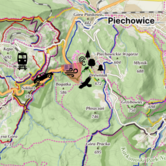
Pětice skladatelů – pedagog, tři studenti a jedna studentka se vydali naslouchat zvukové krajině polského předhůří Krkonoš, aby zkoumali vliv subjektivní percepce na výslednou podobu skladby. Nejdříve zaznamenávali své zvukoprostorové poslechové zkušenosti graficky do skicáků. Vzápětí formulovali tvůrčí záměry skladeb pro komorní ansámbl, které z těchto zkušeností vycházejí. V následujících čtyřech měsících zkomponovali studie s vědomím, že jsou určeny ke studiové realizaci. Kompoziční studie poté sami nahráli a celý proces společně reflektovali. Předložený text vstupuje do kontextu akustické ekologie, instrumentální syntézy a počítačem podporované skladby. Navazuje na kontinuální umělecký výzkum na katedře skladby HAMU v oblasti zvuku a prostoru a tvůrčích aplikací výsledků. Jeho cílem je prozkoumávat vztahy mezi subjektivní zvukoprostorovou zkušeností, volbou kompozičních strategií a výslednou podobou skladby.
Five composers – one teacher and four students – set out to listen to the soundscape of the Polish foothills of the Giant Mountains in order to explore the influence of subjective perception on the final shape of a composition. First, they noted down their sound-spatial listening experiences graphically in sketchbooks. They then formulated creative ideas for chamber ensemble compositions based on these experiences. Over the next four months, they wrote compositional studies with the intention of recording them in the studio. They then recorded the studies themselves and reflected on the entire process together. The presented text enters the context of acoustic ecology, instrumental synthesis, and computer-assisted composition. It builds on continuous artistic research at the Department of Composition at HAMU in the field of sound and space and the creative application of the results. Its goal is to
explore the relationships between subjective sound-spatial experience, the choice of compositional strategies, and the resulting shape of the composition.
Demolish Monsters on the Rocks: Prompting Through an Ensemble
(2026)
author(s): bruce gilchrist
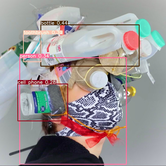
published in: ArteActa – Journal for Performing Arts and Artistic Research
As interaction with corporate artificial intelligence increasingly becomes a precondition for contemporary life, artists need to see beyond Generative AI (GenAI) technology as a discrete tool that makes generic products. Instead, they can imagine combinatorial approaches and conceptual frameworks for AI-enabled artworks. Through my practice-based research, the act of prompting multimodal GenAI models has been informed by comprehending an assemblage as a “framework of instruction” held together through poetic alliances, within which the output from one component feeds the process of another. Practical experiments explored an interrelation of body, text, and predictive technology, where an algorithmic prediction of human action conjured “biometric poetry” that was used to stimulate a language model. Working with archival film footage and digital puppets animated with motion-capture files gave rise to the idea of a camera’s field of view – with its bounded contents acting like a key – eliciting value from a language model in a novel form of story making. Potential erroneous inferences were perceived as a new form of chance operation and a characteristic of algorithmic remix as defined by Steve F. Anderson. This method has been further developed in a project that combines performance, waste material, object recognition, and a language model to explore how the manipulation of garbage can be rationalised by a machine to produce poetic texts as a commentary to action portrayed on a screen.