ΚΆΤΙ COOL 2.0
(2024)
author(s): Nteni Christova, Andreas Soteriou, ioanna christodoulou, Katerina Kountourioti
published in: Department of Multimedia & Graphic Arts - Cyprus University of Technology - [Internal]
Στην εργασία που μας δόθηκε και με βάση την εικόνα που διαλέξαμε, αποφασίσαμε να δημιουργήσουμε ένα aqua-projection. Στο exposition αυτό θα παρουσιαστούν τα υλικά, o σχεδιασμός και η μεθοδολογία. Φωτογραφίες, βίντεο, αλλά και επεξηγηματικό κείμενο.
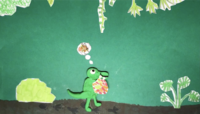
"KAN HALSBANDEN GÖRA SIG AV SIG SJÄLV?" - En studie om inkluderande bildundervisning genom stop motion
(2024)
author(s): Ellen Kugelberg
connected to: Konstfack - University of Arts, Crafts and Design
published in: Research Catalogue
”Can the necklaces make themselves?” - A study on inclusive art education through stop motion
Min studie handlar om hur stop motion och dess egenskaper kan möjliggöra en inkluderande bildundervisning för barn med neuropsykiatriska funktionsnedsättningar (npf). Det är en stor elevgrupp som ofta har svårigheter i bildundervisningen och även i skolan i stort.
Den definition av inkluderingsbegreppet jag utgår ifrån i min studie är den gemenskaphetsorienterade, vilket innebär att särlösningar inte görs för enskilda elever utan alla elever ska vara socialt och pedagogiskt delaktiga. Olikheter ska ses som en tillgång och problem ska inte läggas på en enskild individ utan på undervisningen och skolan som helhet.
Jag har undersökt detta genom arbete med sju elever i en mellanstadieklass på en resursskola för barn med npf och har utformat min undervisning med hjälp av det pedagogiska förhållningssättet ett differentierat lärande och använder mig av design för lärande som teori och tolkningsram.
fimbul
(2024)
author(s): Tor Einar Bekken
published in: Research Catalogue
Improvised music for solo guitar, influenced by the works of performers/composers such as John Fahey, Joseph Allred, Derek Bailey, Wendy Eisenberg, and others.

Contiguous (Enlightenment Panel no 1)
(2024)
author(s): Zoe Panagiota (aka Betty) Nigianni
published in: Research Catalogue
Painting, digital video with dance performance, 2010-2011. Apartment renovation in central Athens (with Sean A. Hladkyj), 2016-17.
1. What happens at the borders where two colours meet? Purposefully exposing by meticulously smudging the edges of painted surfaces shows that there is a small area at the margins that remains undecided.
2. How do we formalise external sensory information? Experimenting with painterly techniques, such as pouring paint directly onto paper and moving the paper around to apply liquid paint, for the larger painting, I methodically applied processes of rationalisation and abstraction for painting a tree branch from life.
The research for the painting and the final work were produced during a painting workshop at the Slade School of Fine Art. The digital video was recorded at one of the rehearsals for a dance performance by choreographer J. Y. Corti at the London Contemporary Dance School.
The title "Enlightenment Panel" comes from Peter Sloterdijk's 'Critique of Cynical Reason', published in 1983, which critically discusses philosophical and popular cynicism.

Rules for the Rigorous
(2023)
author(s): Anna Nygren
published in: Research Catalogue
This project is part of the bigger project "Autistiskt skrivande. Ett modersmål / Autistic Writing. A Mother Tongue", funded by Vetenskapsrådet. The bigger project aims to investigate neuroqueer, and specifically autistic ways of using language. Melanie Yergeau use the term "neuroqueer" to point to the "sidling, desiring, idealizing" aspects of being of a neurofunction set apart from the neurotypical norm. This article is a collaborative piece of writing, created as a poetic research method in how rhetorics are used to inform and create oppressive as well as empowering games of language. Julia Miele Rodas calls it an Autistic Poetics, a way of living with words that exceeds the communicative aspect and leaks into the a(u/r)tistic mind. This text was written as a letter correspondence, a love act, and a curious performance. It is based in a neuromixed research environment and investigates the poetic mode of writing as a platform for further understanding.
About the autors:
Hanna Bertilsdotter Rosqvist is an Associate Professor in Sociology and currently a Senior Lecturer in Social work at Södertörn University. Their research is primary oriented towards disability, but also on gender, sexuality and space
Elisabeth Hjorth is an author, essayist and Senior Lecturer in Literary Composition at Gothenburg University. Their latest publication was Mutant (Glänta, 2021)
Anna Nygren is an author, dramaturgue and Lecturer in Literary Composition at Gothenburg University. Their latest publication was Fuck Your Marsvin And Dö (Poesiwerken, 2021)

[text]uring: writing through fashion for a new literacies dissertation
(2023)
author(s): Rachel Kaminski Sanders
published in: Journal for Artistic Research
The term 'literacy' encompasses reading and writing practices, each with distinct meanings and histories. Scholars define individuals as 'literate' or 'illiterate' based on these practices, a point not to be taken lightly. New literacies studies have expanded literacy from print to encompass all forms of meaning-making, leading to an expansion of associated terminology. In American higher education, despite the expanded meanings of terms like 'writing' and 'text,' the term 'research' remains dominated by written language, even within dedicated disciplines (Coiro et al. 2008; New London Group 1996; Wilber 2008).
Through a cultural studies perspective, I traced the historical evolution of American literacy to the present day. The study revealed darker consequences of literacy's past, providing insights for scholars to understand silenced voices and advocate for their inclusion in the future. Given the ever-expanding practices of literacy, the need for increased attention to writing instruction, and the problematic otherness of arts-based disciplines such as fashion, my goal is to broaden the range of accepted scholarly compositions in higher education. I believe this pursuit is key to the advancement of academic research publications.
To address this paradox, I actively embraced new literacy practices by creating a dissertation supported by Barone & Eisner’s (2012) concept of arts based research. Drawing on my experiences in the industry, I sought to challenge views of fashion as frivolous by writing my dissertation in the language of dress, offering a new perspective on the interwovenness of literacy and fashion. My dissertation argues that fashion is a form of writing by exploring nonverbal communication in scholarly work. This move reconciled the perceived frivolity with the substantive nature of fashion and ignited my commitment to the acceptance of research in diverse language forms.