Home page JSS
(2025)
author(s): Journal of Sonic Studies
published in: Journal of Sonic Studies
Home page of the Journal of Sonic Studies
The zoo: A mise-en-scène
(2025)
author(s): Jocelyn Michel Janon
published in: Research Catalogue
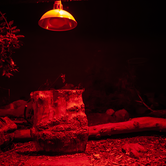
The zoo is not a neutral site of animal display but a meticulously curated mise en scène where scenography dictates perception.
This exposition reframes the zoological garden as a dispositif of control, foregrounding fabricated rock formations, artificial lighting, and concealed barriers as theatrical devices.
Through square format photographic series that exclude animals, the work exposes the zoo’s fragmented geographies as staged spectacles designed for human imagination rather than ecological integrity.
The project interrogates authorship, agency, and representation, inviting viewers to reconsider the zoo as a cultural theatre of estrangement and illusion.
Touring Electroacoustic Musicians
(2025)
author(s): Mathieu Lacroix
published in: University of Inland Norway
Touring occupies a unique and often underexplored role in the careers of electroacoustic musicians, where the intersection of artistic, technical, and logistical challenges becomes especially pronounced. This article examines the practical realities of touring within the context of multichannel electroacoustic music, using Electric Audio Unit’s (EAU) performance in Tallinn as a case study. The article highlights the challenges of preparing for and executing a multichannel concert in an unfamiliar venue, including issues of spatialization, equipment compatibility, and time constraints. Additionally, it reflects on the broader demands placed on electroacoustic musicians, who must often juggle multiple roles to ensure the success of their performances.
The role multichannel Sound Art plays in the Architecture of Theatre and Audience Engagement
(2025)
author(s): Joshua Dyson
published in: Research Catalogue
This Exposition is an extension of the MRes Thesis "The role multichannel Sound Art plays in the Architecture of Theatre and Audience Engagement.”
This nonlinear spread of textual, aural, and visual information will take you through a year of Practice as Research–exploring the field of Sound Art within Cork City–culminating in a multichannel audio installation in Cork Opera House on Culture Night 2025
Visual Overeating: Pop Culture and the Chronically Online
(2025)
author(s): Denisa Ponomarevová, Daniela Ponomarevová
published in: FFA BUT – Faculty of Fine Arts, Brno University of Technology
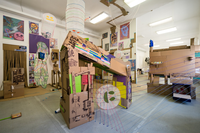
This exposition examines the intersection of drawing, installation, and handmade objects informed by popular culture, spectacle, and visual symbolism. Central to the practice is the duality between physical materiality and virtual environments, a framework through which fictional realities are constructed and analyzed—often reflecting states of exhaustion, overload, and alienation characteristic of hyperactive contemporary culture. The use of low-budget materials and do-it-yourself methods introduces a deliberate tension between meticulous craftsmanship and intentional “amateurism,” while simultaneously subverting the capitalist logics of mass culture through the reuse and recontextualization of its visual language. Connecting introspective and social dimensions, the exposition offers not only an aesthetic experience but also a critical lens on everyday consumer routines, media-shaped reality, and processes of personal self-reflection.
Hidden Stone
(2025)
author(s): Marte Johnslien
published in: Research Catalogue
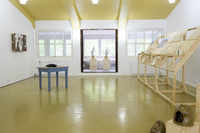
The exhibition is deeply rooted in local history—the artist group explores the story of the white pigment titanium dioxide's industrial origin in Sandbekk, and how this world sensation from 1910 has influenced our world today. Titanium dioxide white pigment is a global color phenomenon. Ilmenite is transported from Titania to its sister company Kronos Titan in Fredrikstad, where it is refined into titanium dioxide. From there, the pigment circulates seemingly invisibly in a global network of systems. It is used in paint, plastics, paper, ink, cosmetics, medicine, sunscreen, and millions of products we use daily. This history is the starting point for the development project TiO2: The Materiality of White.
Over the past two years, the artist group has visited Titania's mines and deposits, gathering materials from the local history. Just as geologists examined the areas in Sokndal over 150 years ago in search of valuable minerals, the group has wandered through the landscape, picking stones and collecting sand, clay, and rust-colored earth. These findings have been brought back to the ceramic laboratory at KhiO, where they have been processed through ceramic methods.