This thesis investigates the crisis of Regie (i.e. of the agency of directing) in a post-#MeToo landscape. It argues that the outset of this crisis lies in an expansionist gesture – rooted in the avant-gardist ambition to merge art and life – by which directors have conflated artistic mandate with managerial control; a gesture culminating in the toxic institutional cultures painfully exposed during the last decade. Starting from this point of no return, the thesis examines the question of how to acknowledge the fact of directorial power abuse without cutting our practices off from the potential – or even the necessity – of directorial agency as such. Its title “Reinventing Regietheater” thus carries the tension between a historical form of theater (generally known as “directors’ theater”) and a yet-to-be-found future expression.
Conceived as artistic research, the discrete focus of the thesis is the rehearsal space and its confines. Within the micro-scale of the latter, the crisis of Regie reverberates first and foremost in the non-foreseeable instances of the actor-director interaction; namely in the increasing scrutiny applied to the tool of improvisation. In contrast to the prevailing strategy of eroding the rehearsal space’s symbolic boundaries (in the interest of directorial accountability), the thesis conceptualizes – practically as well as theoretically – a “Space of Rehearsals” as a heteronomous zone of safe but ecstatic play. This “Space of Rehearsals” is constructed through a rehearsal method informed by the psychoanalytic concept of transference as well as the interaction framework “Wheel of Consent”.
To answer its main questions, the thesis presents a “written part” as well as a set of “online resources” containing the documentation and “re-stagings” of the practical experiments. Four “books of Regie” present methodological reflections, a critical genealogy of a theater of directing (based on the author’s symptomatic practice) as well as the central concepts. Three so-called “Pre-studies”, devised through practical work with professional actors/collaborators form the empirical basis of the thesis, sketching out different possibilities for the actor-director relation in a re-invented Regietheater.
In the proposition resulting from the above, directorial agency does not necessarily sit with the director. Nevertheless, the disciplinary divide between actor and director is upheld; as well as the radical asymmetry in the distribution of authorial power, albeit in temporally limited and co-curated iterations. The main argument of the thesis is thus that the artistic potential of the historical form of Regietheater can be salvaged without taking a revanchist or revisionist stance: the idiosyncratic directorial agency known as Regie has its place in consent-based rehearsal settings.
The zoo is not a neutral site of animal display but a meticulously curated mise en scène where scenography dictates perception.
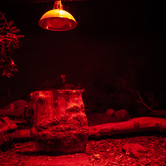
This exposition reframes the zoological garden as a dispositif of control, foregrounding fabricated rock formations, artificial lighting, and concealed barriers as theatrical devices.
Through square format photographic series that exclude animals, the work exposes the zoo’s fragmented geographies as staged spectacles designed for human imagination rather than ecological integrity.
The project interrogates authorship, agency, and representation, inviting viewers to reconsider the zoo as a cultural theatre of estrangement and illusion.
Touring occupies a unique and often underexplored role in the careers of electroacoustic musicians, where the intersection of artistic, technical, and logistical challenges becomes especially pronounced. This article examines the practical realities of touring within the context of multichannel electroacoustic music, using Electric Audio Unit’s (EAU) performance in Tallinn as a case study. The article highlights the challenges of preparing for and executing a multichannel concert in an unfamiliar venue, including issues of spatialization, equipment compatibility, and time constraints. Additionally, it reflects on the broader demands placed on electroacoustic musicians, who must often juggle multiple roles to ensure the success of their performances.
This Exposition is an extension of the MRes Thesis "The role multichannel Sound Art plays in the Architecture of Theatre and Audience Engagement.”
This nonlinear spread of textual, aural, and visual information will take you through a year of Practice as Research–exploring the field of Sound Art within Cork City–culminating in a multichannel audio installation in Cork Opera House on Culture Night 2025
This exposition examines the intersection of drawing, installation, and handmade objects informed by popular culture, spectacle, and visual symbolism. Central to the practice is the duality between physical materiality and virtual environments, a framework through which fictional realities are constructed and analyzed—often reflecting states of exhaustion, overload, and alienation characteristic of hyperactive contemporary culture. The use of low-budget materials and do-it-yourself methods introduces a deliberate tension between meticulous craftsmanship and intentional “amateurism,” while simultaneously subverting the capitalist logics of mass culture through the reuse and recontextualization of its visual language. Connecting introspective and social dimensions, the exposition offers not only an aesthetic experience but also a critical lens on everyday consumer routines, media-shaped reality, and processes of personal self-reflection.